From the clumsy and bulky ruby lasers of the earliest days to today’s sophisticated hybrid welding systems, my life has been intertwined with laser welding. I’ve been an eyewitness to this transformative luminous journey.
In the late 1980s, I first encountered laser welding machines – equipment still steeped in laboratory novelty. Massive CO2 lasers relied on complex water-cooling systems, their pipes coiling like serpents, their incessant hum drowning out all other shop floor noise. Weld quality was highly unstable back then: the laser beam spot was diffuse and difficult to control, weld bead formation was poor, and frequent breakdowns rendered the machine little more than an expensive ornament. Its application scope was severely limited, confined to thin sheets or a handful of metals. Yet, that beam of light piercing through the darkness profoundly captivated me. I sensed this light held the power to revolutionize the world of metal joining.
The 1990s marked laser welding’s true stride into industrialization. Kilowatt-level continuous-wave lasers gradually proliferated, and beam quality improved significantly. Crucially, Nd:YAG solid-state lasers, prized for their exceptional flexibility, began appearing on automotive production lines. I vividly recall introducing laser welding for inner door panel joints. Suddenly, those tight, inaccessible corners – impossible for traditional spot welding – were perfectly fused by the laser beam, yielding uniform and aesthetically pleasing seams. However, prohibitively high procurement and operating costs remained a major barrier for many companies. Welding highly reflective materials like aluminum alloys persisted as a thorny challenge – the beam energy was often “bounced off,” leaving unsatisfactory weld seams.
The advent of fiber lasers around the year 2000 was nothing short of a revolution. Conversion efficiency soared, and beam quality reached unprecedented levels. It felt as if the beam had been granted the precision of an “embroiderer’s needle.” I remember our first use of a high-power fiber laser to weld several-millimeter-thick steel plate. Achieving a single-pass, full-penetration weld with a smooth, uniform back surface in one go electrified the entire workshop! Tasks that previously required multiple passes were now accomplished effortlessly. Even more encouragingly, domestic Chinese laser manufacturers like Raycus and Maxphotonics began to emerge. Their rise significantly drove down equipment costs, accelerating the adoption of laser welding in power battery manufacturing and consumer electronics. The laser spot now danced between delicate electrodes, stitching together the very fabric of a new industrial era.
Today, we stand firmly in the new era of intelligent and hybrid welding. Ten-kilowatt power levels are commonplace. Beam modes can be intelligently adjusted in real-time, while seam tracking and online quality monitoring technologies imbue the welding process with newfound “intelligence.” What impresses me most is hybrid welding technology: the synergistic interplay of laser and arc (MIG/MAG), where their strengths complement each other. This synergy dramatically boosts efficiency while finally overcoming the barriers to welding highly reflective materials like aluminum and copper alloys. This “dance of light and electricity” has become indispensable for producing new energy battery trays and complex automotive body structures. Within smart factories, robotic arms wielding laser welding heads move with agility; the beam, guided by sensors, navigates intricate paths with pinpoint accuracy – a sight utterly unimaginable when I first entered this field.
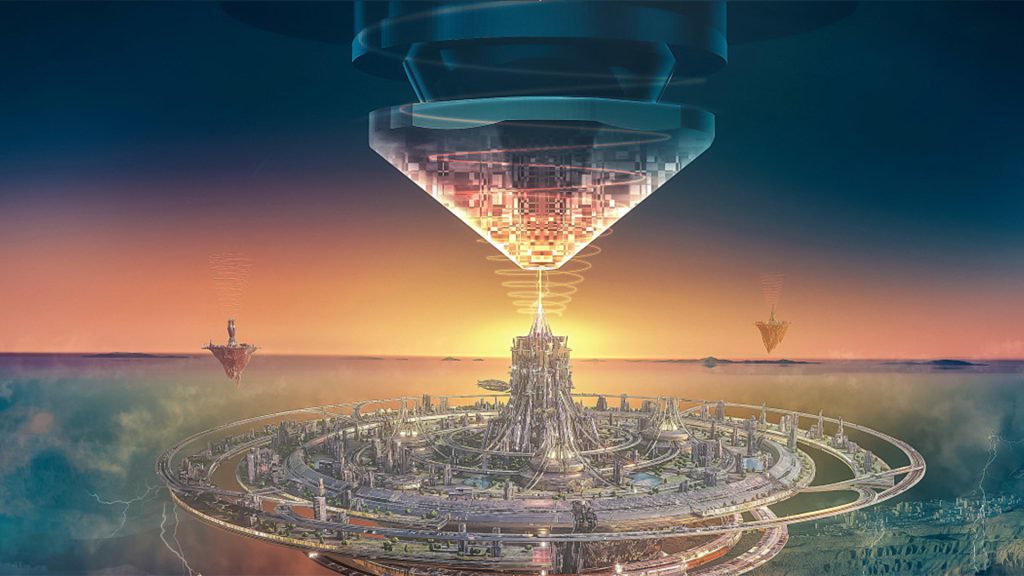
Looking back on this luminous path – from a faint laboratory glimmer to an industrial torrent, from reliance on imports to self-driven innovation – every leap in laser welding technology has profoundly reshaped the very framework of manufacturing. Declining costs, soaring efficiency, and expanding material adaptability have allowed this beam of light to illuminate ever broader horizons.
Yet, the path continues to unfold ahead. Ultrafast laser precision machining, amorphous alloy joining, intelligent adaptive control… these peaks still await ascent, calling out to a new generation of “light chasers.” And I know this beam, crystallizing human ingenuity, will continue to illuminate the future of metal joining and the courage driving our exploration of the unknown. The path of light is boundless, and so too is the spirit of craftsmanship.