In today’s rapidly evolving industrial manufacturing landscape, laser welding technology has become indispensable. Laser welding machines, celebrated for their efficiency, precision, and environmental friendliness, are widely adopted across numerous sectors, significantly enhancing production efficiency and product quality.
I. Applications of Laser Welding Machines
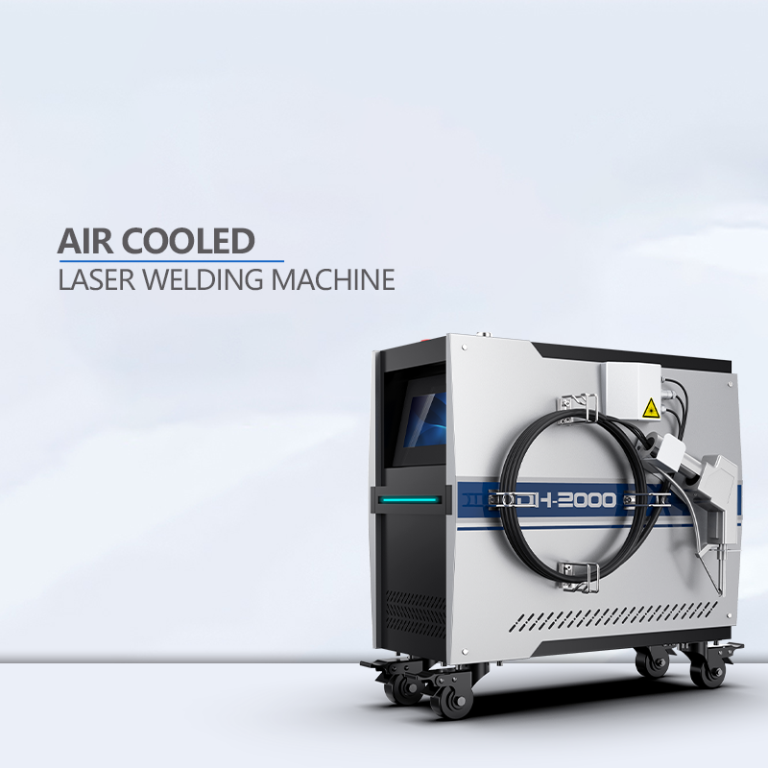
A laser welding machine utilizes a high-energy-density laser beam as a heat source to join materials. It precisely focuses the beam onto the weld point, generating instant high temperatures that melt and fuse materials together. This technology boasts an exceptionally broad application range, spanning:
Automotive Manufacturing: Laser welding is extensively used for automotive body components. It enables high-strength, lightweight structures, improving vehicle safety and fuel efficiency. Laser-welded doors, hoods, and other parts offer superior aesthetics and weld integrity, capable of withstanding greater impacts.
Aerospace: This sector demands extreme material strength and minimal weight. Laser welding excels at precisely joining high-performance materials like aluminum and titanium alloys, ensuring component strength and reliability. Critical parts like aircraft wings and engine blades rely heavily on this technology.
Electronics: Laser welding handles the miniature, high-precision components found in electronics. It provides the exceptional accuracy and reliability needed for welding microchips and circuit boards on devices like smartphones and computer motherboards, ensuring performance and stability.
Medical Devices: Manufacturing medical instruments requires supreme hygiene and precision standards. Laser welding joins materials like stainless steel and titanium alloys for surgical tools and implants. The weld quality directly impacts patient health and safety, as seen in devices like heart stents and artificial joints.
Machinery & Fabrication: In heavy machinery, laser welding tackles large components. It boosts welding speed, minimizes distortion, and ensures dimensional accuracy and mechanical properties. Applications in large machine tools and construction equipment significantly improve production efficiency and product quality.
II. Advantages of Laser Welding Machines
The widespread adoption of laser welding stems from its unique technical advantages:
High Precision: Achieves micron-level accuracy, meeting the stringent demands of industries like electronics and medical device manufacturing.
High Efficiency: Significantly faster than traditional welding methods. Completes complex welds quickly, boosting throughput. Eliminates downtime for consumables like electrodes or filler rods.
Minimal Heat-Affected Zone (HAZ): Concentrated energy input causes negligible thermal distortion to surrounding material. This reduces the need for post-welding machining, making it ideal for thin sheets and delicate parts.
Environmental Friendliness: Produces no harmful fumes or spatter, minimizing environmental impact. Energy consumption is relatively low, aligning with modern industrial sustainability goals.
Flexibility: Computer-controlled systems enable complex weld paths and shapes, adapting to intricate geometries – including 3D contours – with ease.
High Automation: Modern systems feature advanced automation for fully automated welding processes. This enhances consistent weld quality, reduces manual labor, and lowers operational intensity.
III. Future Trends in Laser Welding
Continuous technological advancement drives innovation in laser welding. Future machines will trend towards:
Higher Power: Enabling welding of thicker materials and expanding application potential.
Enhanced Precision: Further improvements in control and beam quality.
Increased Intelligence: Integration of Artificial Intelligence (AI) and the Internet of Things (IoT) for smarter process control, optimizing efficiency and quality.
IV. Conclusion
As a cutting-edge manufacturing technology, laser welding has proven its value across diverse industries. It delivers substantial gains in productivity and quality while aligning perfectly with modern industrial trends towards sustainability and smart manufacturing. As the technology progresses, laser welding will unlock even greater potential in new fields. Forward-thinking enterprises should actively adopt this technology to enhance competitiveness. Concurrently, research institutions and industry players must increase R&D investment to foster continuous innovation and advancement. Undoubtedly, the laser welding machine stands as an essential, highly efficient solution for modern industrial manufacturing.